Tree pruning in Lewisham
Keeping trees in good condition is not just about appearance. It is about safety, light, healthy growth, and making sure your property feels looked after all year round. For homeowners, landlords, housing managers, schools, and businesses, tree pruning in Lewisham is one of the most practical ways to manage outdoor spaces without removing trees unnecessarily. Whether you are dealing with an overgrown garden tree, branches brushing a roof, shade blocking your windows, or a commercial frontage that needs tidying, the right pruning service can make a noticeable difference.
Lewisham has a wide mix of property types, from Victorian terraces and period semis to purpose-built flats, modern developments, local shops, school grounds, and communal gardens. That variety means tree work often needs careful planning. Access can be tight, parking can be limited, and trees may be close to fences, extensions, neighbouring gardens, or busy pavements. A local team understands these practical realities and can carry out pruning with the right balance of care, efficiency, and respect for the surrounding area.
When people enquire about tree pruning in Lewisham, they are often looking for more than a quick cut back. They want a service that improves the tree’s shape, supports healthy regrowth, reduces risk, and leaves the site tidy. If that sounds like what you need, this page explains what the service includes, how it works, what affects pricing, and why choosing a local arboricultural team can save time and stress.
Why tree pruning matters for Lewisham properties

Tree pruning is a skilled part of tree care. It is used to remove dead, damaged, diseased, or poorly placed branches, and to encourage a stronger structure over time. For trees in gardens and shared spaces across Lewisham, pruning can help reduce the risk of branches interfering with roofs, gutters, windows, cables, or walkways. It can also improve the look of a tree so it sits more naturally within the property.
Many local customers also choose pruning to manage light and privacy. In densely built parts of Lewisham, a tree that has grown unchecked can make a garden feel dark or cramped. Careful crown reduction, crown thinning, or selective branch removal can let in more daylight while preserving the tree’s character. The aim is usually to improve the tree, not strip it back.
There are also practical seasonal reasons. Trees can grow unevenly after storms, shed limbs, or put on heavy new growth that becomes awkward as the months pass. A timely prune can help keep the tree balanced and reduce future problems. For commercial sites, pruning can also help keep entrances clear and improve the appearance of the premises for customers, tenants, or staff.
What our tree pruning service includes

Every tree and every site is different, so a proper pruning service starts with understanding the tree species, its condition, and the result you want. Some trees need only a light tidy-up. Others need more structured work to restore shape, reduce weight, or remove hazard limbs. The work is usually planned around the tree’s natural growth habit and the needs of the property.
A typical service may include one or more of the following:
- Crown thinning to reduce density and let more light and air pass through the canopy
- Crown reduction to reduce height or spread while keeping the tree balanced
- Deadwood removal to take out dead branches that may break unexpectedly
- Selective pruning to improve shape and clear problem branches
- Formative pruning for younger trees to support long-term structure
- Clearance pruning around buildings, paths, fences, roads, signs, or boundaries
In many cases, tree pruning in Lewisham can be combined with a tidy-up of the surrounding area so the site is left neat and manageable. Branches and arisings are typically removed from site unless you have agreed otherwise in advance. If your tree is close to a boundary or in a shared garden, the team will usually work carefully to avoid unnecessary disturbance to neighbours and common access routes.
When pruning is better than removal
Not every tree problem means the tree has to come out. In fact, pruning is often the preferred option where the tree is healthy and simply needs reshaping or risk reduction. If a tree is growing too close to the house, casting too much shade, or dropping heavy limbs, pruning can solve the issue while preserving the tree’s benefits.
That matters in Lewisham, where mature trees often add real value to homes and communal spaces. They can soften street views, support wildlife, and make gardens feel established. A skilled pruning plan allows you to keep those benefits while making the tree more practical for everyday use.
How tree pruning in Lewisham works

Most customers want the process to be straightforward, and that is exactly how it should be. A local service normally begins with a site visit or an initial discussion so the tree, location, and access can be assessed. This is especially important in Lewisham, where trees are often set close to homes, alleyways, shared drives, shops, and landscaped communal areas.
During the assessment, the tree care team will look at the following:
- The tree species and its natural shape
- The size, age, and general health of the tree
- Any dead, damaged, or rubbing branches
- Nearby structures, fences, roads, and overhead obstacles
- Access for ladders, climbing equipment, or machinery
- Your aims for light, privacy, safety, or appearance
Once the work is agreed, the pruning can be scheduled for a suitable time. On the day, the team will usually begin by setting up safe working access and checking the area around the tree. The pruning itself is then carried out using the appropriate technique for the species and situation. A careful finish is important: cuts should be placed correctly, and the tree should not be over-pruned or left unbalanced.
Aftercare and follow-up
After the pruning, the tree should be inspected to make sure the intended result has been achieved. Good aftercare also includes a tidy site and practical advice where needed. Some trees may benefit from future routine maintenance, especially if they are fast-growing or if the property has recurring issues with overhang, shading, or wind exposure.
For customers who want long-term tree care, a sensible pruning cycle can prevent a lot of expensive and avoidable problems later.
Local reasons customers request pruning
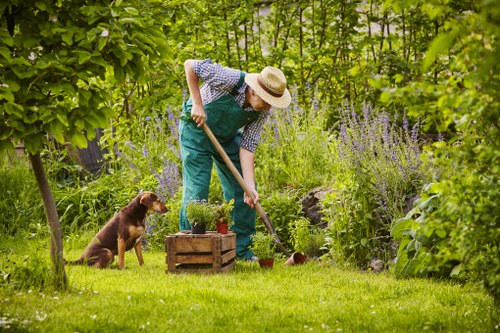
People contact a tree pruning service in Lewisham for many everyday reasons, and most of them are practical rather than dramatic. A tree may simply have outgrown the garden. Branches might be hanging over a neighbour’s property. A canopy may be blocking too much sunlight from a patio or rear room. On commercial sites, trees may need clearing around signage, parking spaces, or customer entrances.
Some of the most common requests include:
- Branches touching or near roofs and gutters
- Heavy overhang into adjacent gardens
- Blocking natural light in homes or conservatories
- Improving visibility and access around driveways
- Reducing the weight of large limbs after seasonal growth
- Removing dead or storm-damaged branches
- Tidying trees in front gardens, courtyards, and communal spaces
In areas such as Catford, Brockley, Forest Hill, Hither Green, New Cross, Ladywell, and Sydenham, gardens and streets can be closely packed. That means a tree can affect more than one property at a time, and the work often needs a considerate approach. A local team will typically be familiar with the pace of the area, the style of housing, and the practical issues that come with working in built-up surroundings.
Residential customers
Homeowners often want pruning for comfort as much as safety. A tree that keeps dropping leaves into gutters, overshadows a vegetable patch, or leans too far toward a conservatory can become a daily nuisance. Pruning is a sensible way to restore order without losing the tree completely. It can also help improve the view from the house and make a garden feel more usable.
For landlords and managing agents, routine pruning can help reduce complaints, support tenant safety, and protect shared outdoor spaces. Keeping trees maintained can also make inspections and repairs easier because access around the building is less obstructed.
Why choose a local Lewisham tree care team

Choosing a local team for tree pruning in Lewisham can make the whole process easier. A local service is more likely to understand the types of properties in the borough, how to work around narrow side access, where parking may be limited, and how to plan work around neighbours and passers-by. That matters on streets where space is tight and every part of the job has to be managed carefully.
There is also the benefit of local knowledge. Different species respond differently to pruning, and trees in urban settings can behave differently from those in more open spaces. A local arboricultural team is used to managing trees in gardens with limited room, near shared boundaries, or close to public footpaths and roads. That familiarity can lead to better decisions and a cleaner finish.
Customers also tend to value clear communication. If you are arranging work for a family home, a block of flats, a school, or a commercial property, you want a team that can explain what will happen, how long it may take, and what access is needed. A good local company keeps the process simple and transparent, which helps you plan around the work with confidence.
What local experience can help with
Local experience can make a noticeable difference in areas like parking restrictions, shared access arrangements, timing the work to reduce disruption, and protecting nearby surfaces, fences, planting beds, and hard landscaping. It can also help when pruning trees with awkward lean, restricted root space, or mature canopies that have not been maintained for some time.
Types of pruning commonly requested
Different trees and different aims call for different techniques. When customers ask for tree pruning in Lewisham, they are not always asking for the same thing. Some trees need shaping, while others need structural work. Some need lightening to reduce wind resistance, while others need clearance from buildings or pathways.
Common pruning types include:
- Crown thinning: removes selected branches to reduce density without changing overall size too much
- Crown reduction: reduces the canopy’s height or spread in a balanced way
- Crown lifting: raises the canopy to improve access, visibility, or clearance
- Deadwood pruning: removes dead branches for safety and appearance
- Formative pruning: shapes young trees to support healthy growth
- Selective pruning: targets specific problem branches or awkward growth
Different species may need a different approach. For example, a tree with a naturally spreading habit may need more careful shaping than one with a compact form. The best results usually come from a restrained, well-planned approach rather than taking too much off at once.
Balancing appearance and tree health
Good pruning should leave the tree looking deliberate rather than hacked back. This is particularly important in front gardens and visible locations where the tree is part of the property’s overall appearance. At the same time, the pruning must support the tree’s health by avoiding poor cuts and unnecessary stress.
A well-pruned tree should look cared for, not overworked. That balance is one of the main reasons customers prefer an experienced local team instead of a rushed or purely cosmetic cutback.
Access, parking, and site challenges in Lewisham
One of the biggest practical factors in Lewisham tree pruning is access. Many properties have narrow side passages, limited front setbacks, shared rear access, or no room for large vehicles directly outside. Busy roads, controlled parking zones, and close-knit terraces can all affect how the work is organised.
For that reason, a local team should be prepared to work methodically and plan the site setup around your property. In some cases, branches and timber may need to be carried through the garden or along a side return. In others, equipment may need to be brought in with careful attention to neighbours, parked cars, or foot traffic.
Commercial customers may also need the work timed around opening hours, deliveries, or public access. Schools, housing associations, retail sites, and office premises often need pruning with minimal disruption, especially when the tree sits near entrances, car parks, or communal routes.
What affects the cost of tree pruning
Customers often want to know what influences the cost of tree pruning in Lewisham. While exact prices depend on the job, several practical factors usually shape the quote:
- The size and height of the tree
- The type of pruning needed
- How much material needs removing
- How easy it is to reach the tree
- Whether equipment needs special setup
- How close the tree is to buildings, fences, roads, or power lines
- How much tidy-up and waste removal is required
- Whether the work is part of a larger garden or site maintenance plan
Jobs involving restricted access or particularly awkward locations may take more planning and labour than a tree in an open garden. If the tree is large, mature, or close to structures, the work may also require more careful sectional pruning to protect the surrounding area. A proper quote should reflect the actual site conditions rather than relying on assumptions.
If you are comparing options, it is sensible to ask what is included in the service. For example, does the quote cover removal of arisings, tidying, and any access planning needed for the site? That kind of clarity helps you compare like for like.
How to prepare for your pruning appointment
Most customers do not need to do much before the team arrives, but a little preparation can make the visit smoother and quicker. Clearing access and sharing any important information in advance can help the work proceed safely and efficiently.
Here is a simple checklist:
- Move vehicles if they block access to the tree or the driveway
- Keep pets and children away from the work area
- Let neighbours know if branches may briefly overhang shared boundaries during the job
- Remove delicate items from the garden where possible
- Point out any underground features, garden lights, or recent landscaping
- Highlight any concerns about instability, previous damage, or nearby structures
If the tree is in a communal space, it can also help to confirm access arrangements in advance. For commercial properties, make sure anyone responsible for site entry understands the planned time and area of work.
Areas covered across Lewisham
Tree pruning services are often requested across the wider Lewisham area, including residential streets, estates, and mixed-use locations. Customers typically come from places such as:
- Lewisham
- Catford
- Hither Green
- Ladywell
- Forest Hill
- Brockley
- New Cross
- Sydenham
- Honor Oak
- Deptford
These areas include a range of gardens, frontages, and shared outdoor spaces. Some have mature trees with substantial canopies, while others have smaller ornamental trees that need careful shaping to fit the space. A local service can adapt to those differences and provide the right level of pruning for each setting.
Commercial tree pruning for local businesses and organisations
Tree pruning in Lewisham is not just for homes. Businesses and organisations often need regular tree care to keep outdoor areas presentable and practical. A tidy tree line can improve the look of a shop frontage, café terrace, office entrance, care facility, or school perimeter. It can also help keep sightlines open and reduce obstructions around paths and parking bays.
Commercial pruning often needs to be timed carefully. Work may need to happen before trading hours, during quieter periods, or in stages so access is maintained. A local team can usually help plan around those needs, making it easier to keep the premises functioning normally while the work is completed.
For landlords and property managers, routine pruning can also help with building maintenance. Less overhang means less leaf accumulation in gutters and less interference with roofs, walls, or shared walkways. That can support a cleaner, safer, and more manageable site over time.
Health, safety, and responsible tree care
Pruning should always be carried out with safety in mind. That includes the safety of the workers, the property, and people nearby. Trees close to roads, paths, and neighbouring gardens require careful handling, and the correct equipment and methods should be used for each situation.
Responsible pruning also means respecting the tree. Cutting too much can weaken growth, invite stress, or leave the canopy looking uneven. A sensible approach considers both the immediate problem and the long-term condition of the tree. If the tree is protected or subject to special controls, the work may need extra checks before it goes ahead.
Frequently asked questions
How often should trees be pruned?
It depends on the tree species, age, growth rate, and location. Some trees only need attention occasionally, while fast-growing or tightly placed trees may need more regular maintenance. A local assessment can help set a sensible schedule.
Can pruning damage a tree?
Yes, poor pruning can damage a tree. Over-cutting, bad cuts, and excessive removal of foliage can all cause problems. That is why it is important to use a careful, species-appropriate approach rather than treating all trees the same.
Will pruning make my tree smaller forever?
Not necessarily. Many trees will continue to grow after pruning, which is normal. The aim is usually to reduce size, improve shape, or manage risk for a period of time, with future maintenance as needed.
Do I need permission to prune a tree?
Sometimes, yes. If a tree is protected or located in a controlled setting, there may be restrictions. If you are unsure, it is wise to have the tree checked before work is booked so the right steps can be taken.
What happens to the branches and waste?
In most cases, the cut material is taken away unless you request otherwise. If you want to keep some woodchip, logs, or brash for your own use, this can sometimes be arranged in advance depending on the job.
Can pruning help with light in the garden?
Yes. Careful crown thinning or selective reduction can make a noticeable difference to light levels, especially in gardens that feel overshadowed by mature trees or neighbouring vegetation.
Why customers book local tree pruning promptly
Putting off pruning often means the problem grows with the tree. Over time, branches can become heavier, more awkward to reach, and more likely to interfere with nearby structures. What could have been a straightforward prune may later become a bigger and more expensive job. That is why many customers prefer to act before the tree starts causing repeated nuisance or visible risk.
Booking early can also help you plan around the seasons. If you have a preferred time for garden use, property maintenance, or business operations, pruning can be arranged to suit that schedule where possible. For many customers, the best outcome is simply a tree that looks good, behaves better, and does not create avoidable day-to-day problems.
If your tree is starting to feel too large, too dense, or too close to the house, now is a good time to get it assessed.
Book your tree pruning in Lewisham
If you need tree pruning in Lewisham, it makes sense to choose a service that understands local properties, access challenges, and the practical needs of both residential and commercial customers. From a single garden tree to multiple trees on a managed site, the right pruning work can improve safety, appearance, and usability without removing valuable trees unnecessarily.
Whether you are dealing with overhanging branches, a crowded canopy, deadwood, or a tree that simply needs professional shaping, a local team can help you decide on the right approach. Contact us today to discuss your tree, request a free quote, or arrange a visit at a time that works for you. If you are ready to move ahead, book your service now and take the first step toward a safer, tidier, better-managed outdoor space.