Crown Thinning in Lewisham
Professional crown thinning for homes and businesses across Lewisham
If your tree is becoming too dense, blocking light, catching the wind, or starting to feel heavy and untidy, crown thinning in Lewisham can be a practical, tree-friendly solution. It is one of the most useful arboricultural services for local gardens, front drives, shared courtyards, commercial sites, and street-facing trees where you want to keep the natural shape of the tree while improving light, airflow, and overall safety.
In a borough like Lewisham, where mature trees sit alongside terraced homes, Victorian and Edwardian properties, maisonettes, flats with communal gardens, schools, shops, and office sites, trees often need careful management rather than drastic work. Crown thinning helps reduce congestion within the canopy by selectively removing smaller internal branches, making the tree lighter without turning it into a stubby or overcut shape. For many customers, that means a better balance between enjoying the tree and living with it comfortably.
Whether you are dealing with a leafy garden in Catford, a boundary tree near Brockley, a courtyard specimen in Deptford, or a roadside tree close to Hither Green, crown thinning can make everyday life easier. It can improve the quality of light indoors and outdoors, reduce rubbing branches, and lower the wind resistance of the canopy. If you are comparing options and want a local team that understands both the trees and the practicalities of working in Lewisham, request a free quote and ask about the best approach for your property.
What crown thinning actually means
Crown thinning is the selective removal of some smaller branches throughout the crown of a tree. The aim is not to shorten the tree or strip away its natural outline. Instead, the work opens up the canopy in a measured way so that more light and air can pass through while the tree keeps its overall size and shape.
This service is often chosen when a tree looks too dense but still has a healthy structure. A well-done thin can help reduce sail area in windy conditions, which is especially helpful in exposed spots or places where gusts can funnel between buildings. It can also help a tree shed less debris in heavy weather because the canopy is less congested and less prone to branch rubbing.
Many people confuse crown thinning with crown reduction or crown lifting. They are different services with different outcomes. Crown thinning is generally about selective interior pruning; crown reduction is about reducing the height or spread; crown lifting removes lower branches to create clearance underneath. The right choice depends on the tree, the site, and what you want to achieve. A local arborist can explain whether thinning is the most suitable option for your tree in Lewisham.
When thinning is the right choice
Crown thinning is often ideal when you want to keep the tree’s form but improve conditions around it. It is particularly useful if the tree is healthy but feels too heavy, too shaded, or too windy. It is also a sensible option if branches are rubbing against each other, which can lead to damage and create entry points for decay.
Why Lewisham customers ask for crown thinning
Lewisham has a wide mix of housing and green spaces, and that creates very different tree care needs from one street to the next. Some residents want to keep a mature tree in a compact back garden but need more daylight in the house. Others want to reduce the amount of branch movement over parking spaces, paths, or play areas. On commercial premises, dense trees can block signage, affect visibility, or create maintenance issues around roofs, loading areas, and entrances.
In local residential settings, crown thinning is often requested for practical reasons such as improving daylight to kitchens, loft rooms, and rear extensions. In many terraces and semi-detached homes, gardens are fairly narrow, so a broad, dense canopy can quickly dominate the space. Thinning helps the garden feel more usable without removing the tree that gives the area character and privacy.
For business owners and property managers, the service can support a cleaner, safer, and more manageable site. If you oversee a shop frontage, care home, school, church grounds, housing block, or industrial yard, a dense canopy can create unnecessary issues with falling leaf litter, poor visibility, and branch movement in wind. A local service for crown thinning in Lewisham can be planned around access limitations, busy roads, and the need to minimise disruption to staff, residents, or customers.
Common local situations where thinning helps
- Overgrown garden trees shading living rooms and patios
- Street-facing trees causing concerns about wind rock or heavy branch movement
- Boundary trees creating excessive shade over neighbouring properties
- Dense crowns interfering with rooflines, guttering, or solar gain
- Trees in communal gardens where light levels matter to several residents
- Commercial trees affecting access, signage, or safety around entrances
What a professional crown thinning service includes
A proper crown thinning service should be carried out with care, judgement, and respect for the tree’s long-term health. The work is selective and thoughtful, not random cutting. A trained arborist will look at the species, age, structure, condition, and site constraints before deciding how much to remove and where.
The exact work can vary, but it usually includes removing selected smaller branches, reducing overcrowding, and maintaining an even distribution through the canopy. The goal is to create a lighter crown while avoiding visible gaps or a lopsided appearance. In many cases, the work is done from climbing equipment or with appropriate access methods depending on the layout of the site.
Customers often appreciate that crown thinning can improve the tree without making it look heavily altered. It is a subtle but effective form of tree care, especially when compared with more dramatic pruning. For households in Lewisham who want better light and less wind resistance but still value the presence of a mature tree, it can be the best middle ground.
Typical elements included
- Inspection of the tree and surrounding area
- Selection of suitable branches for removal
- Selective pruning to reduce crowding inside the crown
- Attention to balance and natural shape
- Clearance of cut material from the work area
- Advice on whether follow-up maintenance may be useful
Benefits of crown thinning for Lewisham properties
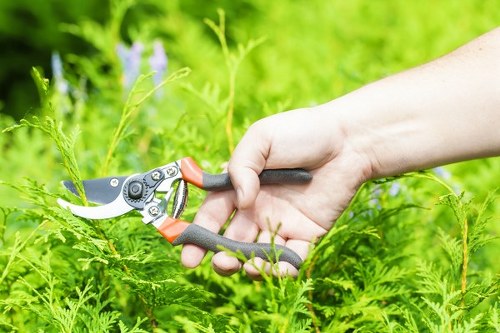
There are several reasons local property owners choose this service. One of the biggest is improved light. In urban areas where homes are close together, even a single mature tree can have a noticeable effect on daylight. Thinning can help more light reach rear windows, gardens, side passages, and neighbouring spaces without stripping away the tree entirely.
Another major benefit is airflow. A dense canopy can act like a sail in windy conditions, especially on exposed corners or higher ground. By creating more space through the crown, the tree may move more naturally in the wind and place less stress on branches. This matters in places where trees stand close to buildings, vehicles, fences, and paved surfaces.
It can also improve the look of the tree. When branches are overcrowded, the canopy may appear heavy and untidy. Thinning helps the tree look better proportioned and can bring out its natural structure. For many customers, that is the ideal result: a tree that still looks like a tree, just healthier and more manageable.
Practical benefits customers often notice
- Brighter rooms and gardens
- Less wind resistance and movement
- Reduced rubbing and branch congestion
- Cleaner appearance and better structure
- Improved comfort around outdoor seating areas
- Better balance between tree retention and everyday use of the property
How crown thinning works on site
Step-by-step approach
A careful service starts with a proper assessment. The arborist will look at the tree’s species, size, condition, previous work, and relation to buildings, fences, roads, and neighbouring properties. This first stage matters because different trees respond differently to pruning, and a professional should avoid removing too much or creating stress.
Next comes the selective pruning itself. The work is usually focused on smaller internal branches rather than large limbs. The intention is to keep the tree’s outline intact while opening the crown from within. A sensible amount is removed based on the tree’s condition and the customer’s aims, rather than applying a one-size-fits-all approach.
After the pruning, the site is tidied and the waste is cleared away. Many Lewisham customers value this part just as much as the tree work itself, especially when access is tight and shared spaces must be kept usable. If branches need to be carried through narrow side returns, small entrances, or communal areas, good planning makes a big difference.
Why careful assessment matters
Not every tree should be thinned in the same way. Some species tolerate canopy work more comfortably than others, and some trees are already under stress from drought, compacted soil, damage, or previous poor pruning. A skilled local team will work with the tree rather than against it.
Preparation checklist for customers
Before your appointment, a little preparation can make the job smoother and quicker. This is especially useful in Lewisham, where parking, shared access, and compact outdoor spaces can create extra practical challenges. You do not need to do heavy lifting yourself, but a few simple steps can help.
If the tree is in a back garden, think about access routes. If it is near a driveway or front boundary, consider whether vehicles need to be moved. If there are delicate pots, garden furniture, washing lines, children’s play items, or ornaments nearby, it is wise to move them out of the working area. For properties with shared access, letting neighbours know in advance can help avoid delays.
It is also helpful to mention any concerns you have about the tree, such as previous storm damage, branch dieback, nearby nesting activity, or roots affecting paving. The more information you can share, the easier it is to recommend the right level of crown thinning and plan the work safely.
Simple checklist before the visit
- Clear parking or driveway space if possible
- Move fragile items away from the work area
- Unlock gates or provide access instructions
- Tell neighbours if branches overhang their property
- Share any known tree issues or restrictions
- Keep pets and children safely away during the work
Pricing factors for crown thinning in Lewisham
Customers often want to know what affects the cost of crown thinning. While exact prices depend on the tree and site, several common factors influence the level of work involved. Understanding these can help you compare quotes more confidently and see why one job may differ from another.
The size and condition of the tree matter a great deal. A small ornamental tree in a front garden will usually take less time and equipment than a large mature tree in a rear garden with difficult access. The species also matters, because some trees have denser canopies, more brittle growth, or structural features that require extra care. Location on the property is another factor, particularly if access is tight or if the work must be done carefully around roofs, sheds, fences, or neighbouring land.
Waste removal and clearance may also affect the job planning. In a busy urban area, a tree can produce a lot of material, and that has to be handled safely and efficiently. Some sites allow easy loading, while others require more manual carry-out through narrow passages or shared access ways. A local company familiar with Lewisham properties can usually assess these issues quickly and explain what is involved.
Things that can influence a quote
- Tree height and spread
- Density of the crown
- Species and condition of the tree
- Access to the work area
- Need for climbing or specialist equipment
- Amount of waste to be removed
- Whether the site has parking or loading restrictions
Why choose a local Lewisham tree team
Choosing a local service has real advantages. A team that works regularly in Lewisham is more likely to understand the property layouts, typical access problems, and the practical realities of local streets. That can make a noticeable difference to both planning and the smooth running of the job.
Local knowledge matters in areas with narrow roads, controlled parking zones, front gardens with limited turning space, and rear access through alleyways or side returns. It also helps when working around schools, retail sites, shared developments, and homes where neighbours are close by. A local company is more likely to plan with these constraints in mind from the start rather than reacting to them on the day.
There is also the benefit of straightforward communication. If you want to discuss the tree, explain your concerns, or arrange a visit that fits around work and family life, a nearby arborist is usually better placed to respond quickly. For many customers, that practical convenience is just as important as the pruning itself.
Local benefits at a glance
- Better understanding of Lewisham property types
- More practical planning for access and parking
- Suitable for residential, communal, and commercial sites
- Faster response to site visits and quotations
- More relevant advice for urban tree care
Residential crown thinning for gardens, frontages, and shared outdoor spaces
Homeowners in Lewisham often ask for crown thinning because they want to keep a mature tree but reclaim some usable space. This is common in gardens behind terraced houses, where trees can spread wide and overshadow seating areas, lawn space, and planting beds. Thinning can make the garden feel brighter and more open without removing a feature that adds privacy and character.
It is also helpful for trees near extensions, conservatories, and loft conversions. These parts of a house often rely on natural light, and a dense crown can quickly make them feel darker than they should. A selective thin can help restore daylight while keeping the tree looking healthy and established.
Shared spaces present a different challenge. In blocks of flats or maisonettes, one tree can affect several households at once. In these situations, a balanced and sympathetic approach is important because the work needs to satisfy different users of the space. Crown thinning is often the preferred option when the tree is worth keeping but its canopy has become too dominant.
Residential examples of suitable work
- Back garden trees casting heavy shade over patios
- Front boundary trees obscuring windows or paths
- Ornamental trees growing too dense for small plots
- Specimens near sheds, garages, or summerhouses
- Trees affecting light in shared gardens or courtyards
Commercial and public-facing sites
Commercial customers in Lewisham often need tree work that is neat, efficient, and sensitive to daily operations. A dense canopy at a business premises can affect visibility, make entrances feel less welcoming, and create more maintenance work than necessary. Crown thinning offers a way to improve light and presentation while keeping the site green and attractive.
This service is commonly relevant for shops, offices, hospitality venues, schools, nurseries, healthcare settings, housing associations, and managed estates. In each case, the key is to reduce the canopy in a controlled way so the tree still provides the environmental and visual benefits people expect, without causing avoidable disruption.
Commercial sites can also have particular scheduling needs. Work may need to happen early, between operating hours, or with attention to pedestrian traffic, deliveries, and staff movement. A local team used to working in Lewisham is more likely to manage these details effectively and keep the work area orderly.
Commercial priorities often include
- Maintaining safe access for visitors and staff
- Keeping entrances and signs visible
- Reducing excessive shade on paved areas
- Limiting disruption to operations
- Presenting the property in a tidy, cared-for way
Areas covered across Lewisham
Tree care needs vary across the borough, but crown thinning is relevant in many parts of Lewisham where mature trees sit close to homes and buildings. Services are often requested in areas such as Lewisham town centre, Catford, Hither Green, Brockley, Deptford, Honor Oak, New Cross, Forest Hill, Sydenham, and nearby neighbourhoods. Each location brings its own access and property-layout considerations, from compact terraces to larger plots and managed communal spaces.
Because many streets in and around Lewisham feature a mix of period houses, newer developments, and shared outdoor areas, a flexible approach is essential. A local company can adapt the work to the type of property and the tree species involved rather than treating every site the same.
If you have a tree just outside these areas but still in the surrounding South East London region, it may still be worth asking for an assessment. The best way to know what is possible is to request a visit or share a few details about the tree and site.
Frequently asked questions
Is crown thinning the same as reducing a tree?
No. Thinning removes selected internal branches and keeps the overall outline intact. Reduction shortens the height or spread of the tree. If you want more light and better airflow without making the tree noticeably smaller, thinning may be the more suitable option.
Will thinning make my tree look bare?
It should not, if it is done properly. A professional approach aims for even spacing and a natural appearance. The tree should still look full, just less congested and easier to live with.
How often should a tree be thinned?
That depends on the species, age, growth rate, and site conditions. Some trees may only need occasional attention, while faster-growing trees may require more regular management. A local arborist can advise based on the actual tree rather than a fixed schedule.
Can crown thinning help with wind issues?
Yes, it can help reduce the resistance the canopy offers to wind, which may improve stability and reduce strain. It is not a cure-all, but it can be a sensible part of managing a tree in an exposed or built-up location.
Do I need permission for crown thinning?
Sometimes, yes. Trees may be subject to a Tree Preservation Order or located in a conservation area. Before any work begins, the tree should be checked properly so the right permissions can be considered where necessary.
What if the tree overhangs a neighbour’s garden?
Overhanging branches are a common reason for thinning or other pruning work. It is usually best to discuss the situation carefully and make sure the work is planned responsibly. Good communication often helps avoid unnecessary disputes.
What to expect when you request a quote
When you ask about crown thinning in Lewisham, it helps to provide a few basic details: the type of tree if you know it, its approximate size, where it sits on the property, and what you want to improve. For example, you might want more light, less wind movement, better clearance, or a tidier look. These details help the team understand whether thinning is suitable and how the work might be carried out.
A sensible quote process should feel straightforward. You should be able to explain your needs, arrange a visit if required, and receive a clear explanation of the recommended work. If the tree is in a sensitive position or close to buildings, the assessor may want to inspect it in person before confirming the scope. That is normal and often the best way to ensure the right outcome.
If you are planning other garden or property maintenance at the same time, it may also be worth mentioning that during the quotation stage. Coordinating jobs can sometimes reduce disruption and make the overall project easier to manage.
Good reasons to enquire now
- You want to restore more natural light
- The canopy feels too heavy or crowded
- Branches are rubbing or growing awkwardly
- You want a safer, more manageable tree
- You need a practical solution for a busy home or business site
Book crown thinning in Lewisham with a local team
If your tree is healthy but too dense, or if it is causing day-to-day issues with shade, airflow, or visual clutter, crown thinning may be the right answer. It is a considerate way to improve the tree’s performance and appearance while preserving the character that mature trees bring to Lewisham’s homes and streets.
From narrow terraces and garden squares to commercial forecourts and shared residential grounds, the right pruning can make a big difference to how a property feels and functions. A local arborist can assess the tree, recommend the most suitable work, and carry it out with care for both the tree and the surroundings.
Contact us today to discuss your tree, ask questions about the service, or request a free quote. If you are ready to improve light, reduce crowding, and keep your tree looking natural, book your service now and take the next step toward a more balanced outdoor space.